
Motivation for the Centre
Dr. Stephen N. Ndode, founder of the International Centre for Innovations in Communication Research and Media Writing, holds a Ph.D in Mass Communications from the Department of Journalism and Mass Communication in the University of Buea, Cameroon. He did his undergraduate and Masters Studies in the same Department. Dr. Ndode’s drive and passion for research ignited the spirit for the creation of this research centre. Dr. Ndode has realised that students do not receive sufficient and specialised training in communication research. Consequently, they fail to take cognisance of what is happening around their communication environment, cannot document such occurrences, and cannot relate how issues in the mass media can be used to transform and develop society. This is what Communication Research students should be doing in the 21st century, which we have identified as a gap.
Dr. Ndode brings into the Centre over 12 years of training in communication research. While at the undergraduate level, passion for research began when Dr. Ndode joined the research team at the communication Research Centre of the Department of JMC upon his enrolment into the undergraduate programme in JMC in October 2009. As a junior Research Assistant, he did his first internship at the CRC in August 2010. Here, he gathered basic skills in research which sustained his way till date. Dr. Ndode led and coordinated several research projects as Research Assistant at the Undergraduate.
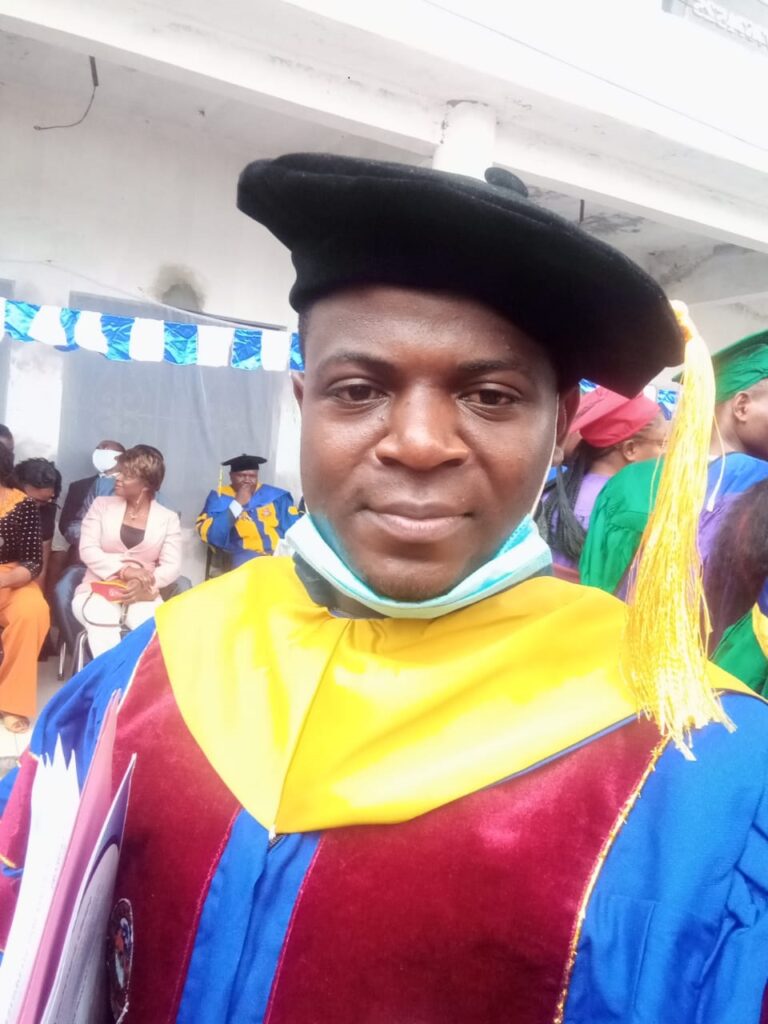
At the final year, he was the senior research assistant at the CRC. Even when Ndode graduated in December 2012, he still kept contact with the CRC; mostly in his contributions in training junior research assistants at the centre, some of whom occupy junior and senior positions in the media and communication industry today. One of such training programmes was the summer internship programme (about 2 months) in which students are rigorously trained in Communication Research Methods. When Dr. Ndode enrolled for the Masters programme in Journalism in October 2013, he was the Graduate Research Assistant (GRA) at the CRC. During this period, he coordinated several research projects and continued to mentor undergraduate and graduate students in communication research and research in other disciplines, especially in the social sciences and the humanities.
In October 2016, Dr. Ndode enrolled into the Ph.D programme in Mass Communications, Department of JMC-UB. While in the programme, he remained Graduate Research Assistant until January 2017 when he was appointed Director of the Communication Research Centre. As Director, Dr. Ndode coordinated several research projects and continued to mentor undergraduate and postgraduate students. One of the most remarkable of such projects is the successful completion of his Doctoral Research on “Professionalisation of Training Towards a Model of Excellence for Journalism and Mass Communication in Cameroon”. This was a large scale research that employed a mixed methods design, consisting of quantitative and qualitative approaches.
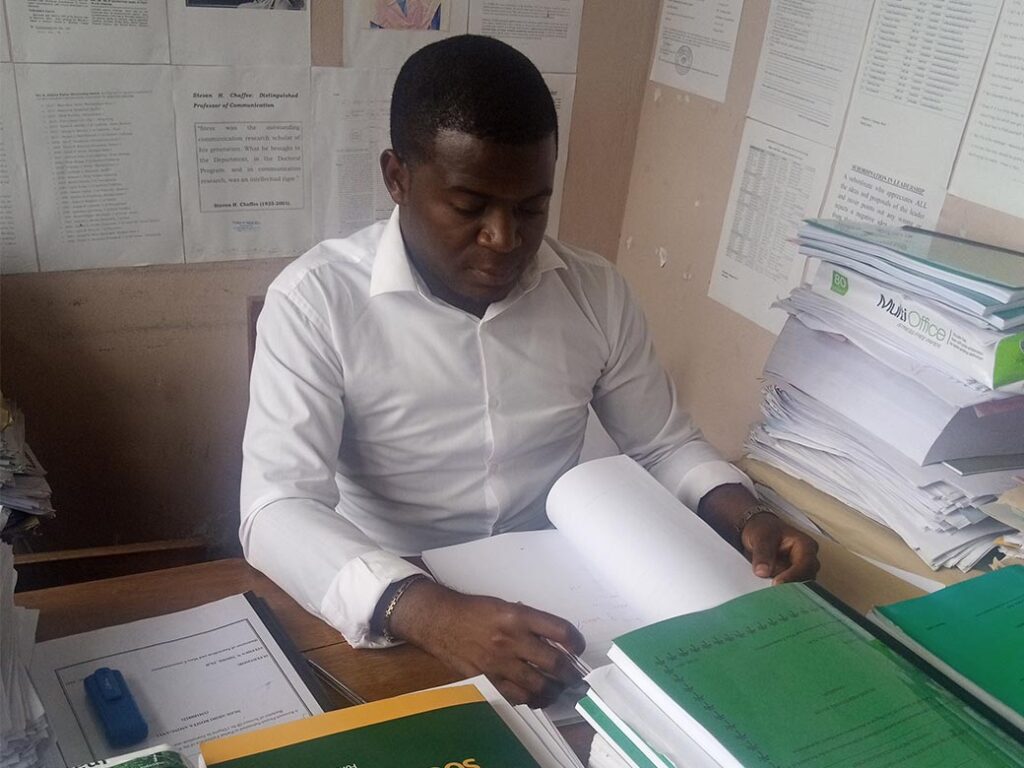
This project took Dr. Ndode and his research team to four Journalism and Mass Communication Training institutions in Cameroon, that is, the Advanced School of Mass Communication (ASMAC) in Yaounde, the Department of Journalism and Mass Communication in the University of Buea, the Department of Journalism at Siantou University in Yaounde, and the School of Journalism and Media Studies at the National Polytechnic in Bambui, Bamenda. In these four training institutions, 535 students were surveyed, 37 educators were surveyed and 4 heads of Department / Directors of School were interviewed. The research also involved a survey of 215 journalists who trained in the four institutions mentioned herein. The journalists were surveyed in the towns in which the key selected training institutions are located (Yaounde, Buea, Bamenda). Douala was added because of its media richness, and as a key town that hosts many graduates from these training institutions. This project received acclaim and was graded by a team of Journalism and Mass Communication and Education experts as “Excellent”. The results of the research are telling!
With this wealth of skills, knowledge, and experiences gathered over the years, Dr. Ndode felt compelled to create this research centre so as to continue impacting the society, especially young people, some of whom graduate today and cannot put a finger on any specific skill they can demonstrate towards making the world a better place. Dr. Ndode clearly spells out that his goal is “to produce Stephen Ndodes”.
He narrates his story: “Individually, the media have been, and continue to be, a large part of my life. I always monitor what is happening in the media. My parents played an incredible role in my love for the mass media till date. They were my first media teachers. Radio was one of the first media I got in touch with. Back then, my father owned a radio set and frequently listened to the news. At that tender age, I knew the names of journalists who presented the news and wrote their names on a clean sheet of paper and attached it to the wall beside our family bed. I later on got closer to reading newspapers in secondary school, getting in contact with TV (few persons owned TV at the time – only one person owned a TV in my village)”.
“As young secondary school children, we occasionally visited homes with TV to watch news, music, football, series, or a movie. Today, it is the Internet of Things, and young as well as old persons are grappling with the technology for different uses and gratifications. The mass media affect daily life from diverse perspectives (direct, indirect, short, medium, and long terms, conditional, cumulative, cognitive, attitudinal, behavioural, physiological, and from a third person perspective). We study these effects at ICICREMW. My daily encounter with mass media and media audiences equally informed the creation of this Research Centre.”
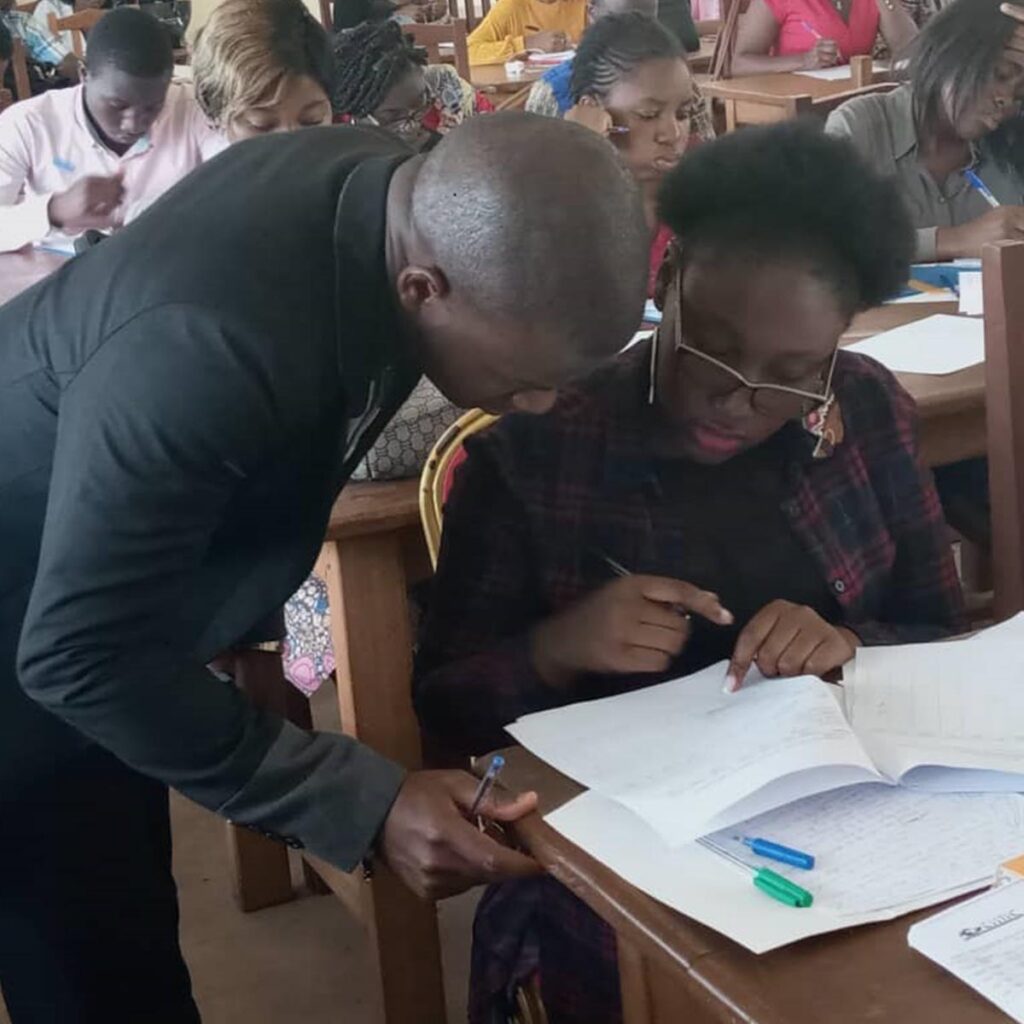
“To add, the students I teach have played an indelible role towards the establishment of this research centre. Some showed me outrightly that they love research and needed an opportunity to exercise. I often receive challenging questions from my undergraduate and graduate students each time I share with them my research experiences. Such questions, criticisms, and comments constituted the foundation on which I developed, built, and sustained ideas for this research centre. The essence is to try hard and only want the best for the students by enabling the Centre become a citadel of academic and professional learning and a vibrant home of sound minds.”
“In addition, I have realised how students treat research with mediocrity and as a passive activity. This has caused me to feel grieved in my spirit. Students copy and paste from the Internet without reading through, inputting, commenting on, or criticising content from the web. This is recurrent, mostly during assignments and long essay research (for undergraduates), and the same mediocrity manifests at the postgraduate level.”
“I have judged instances where students take up questionnaires meant for respondents and fill them in their rooms. Some even ‘manufacture’ and conjure data. This, to me, is a huge blow to research, academics, and professionalisation. This is a desecration of academics and the emergence of dishonest citizens. When such students graduate, the likelihood for them to repeat such dishonest behaviour in industry is high. So, the time to arrest this mediocrity is now.”
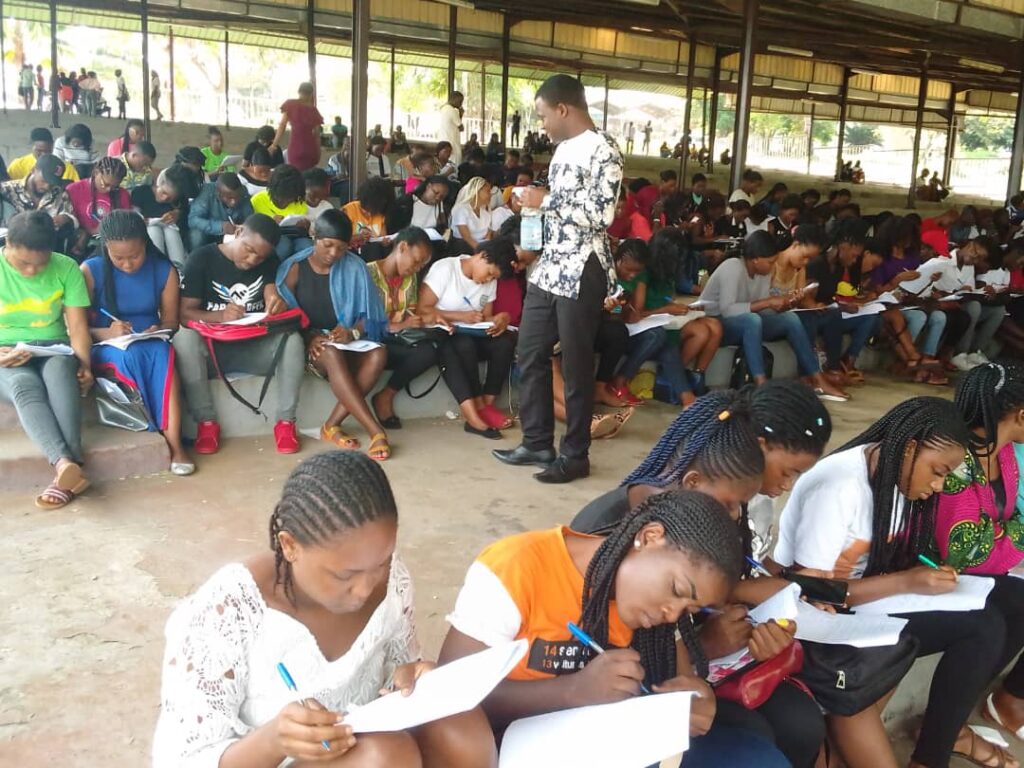
“Our goal is to cause ICICREMW to be a reference Centre for the training of honest citizens who can effect meaningful and honest changes in their communities, country, continent, and the world. When fraudulent information is used as part of data collection, the results will also be fraudulent. These are the types of results most academic and professional supervisors have been grappling with for the past years, and I feel absolutely concerned.”
“In exceptional cases where the data are properly collected, some students go to the extent of providing fraudulent data analysis. Either they do not know how to go about analysing the data, or they simply hand it to someone who ‘manufactures’ the results which a scientific eye cannot behold. Such fraudulent results do not match the research problem, research questions, and the research objectives. We are here to make a difference and cause students to see the value and benefits of honestly and rigorously following up with all research processes, especially in the area of communication research.”
“Another important motivation is that, from the African perspective, we have realised that our rural communities are understudied. Often, rural communities are left out in decision making about community, regional, and national life. In Cameroon, this happens because there are huge communication gaps in understanding how rural communities make use of and react to media messages. It is assumed, at times, that rural communities are backward and unenlightened, and so, everything should be forced down on them. This is autocratic and lacks a participatory approach. Such an approach also runs contrary to modern communication processes in which feedback is quintessential. ICICREMW fills this gap by getting an African perspective and proffering solutions to especially communication problems facing Cameroon and Africa.”
“We are of the view that indigenous solutions to African problems can only be offered through an African perspective. This is the principle of African Communication Research which we hold so dearly to our hearts. In fact, it falls squarely within the scope of our mission and vision, and constitutes a key motivation for the creation of an innovative Centre like ICICREMW. By so doing, our innovative research is intended to gain grounds, grow, become sustainable now and in the future, and have realistic and tangible impact”. “In addition, we are strongly motivated by the increasingly intertwined relationships between mass media and social work. The world is currently witnessing continuous and considerable changes that take place in individuals, cultures, society, and a wide range of concerns that preoccupy social workers today, including: child care/child labour/child abuse, care for the elderly, care for vulnerable populations, handling cases of disability, addressing poverty, migration issues, and increasing refugee crises around the world. We are interested in how these issues are portrayed in the media, public perception of media representations of these issues concerning especially vulnerable groups, as well as how social workers use the mass media to maximise social work outcomes.”